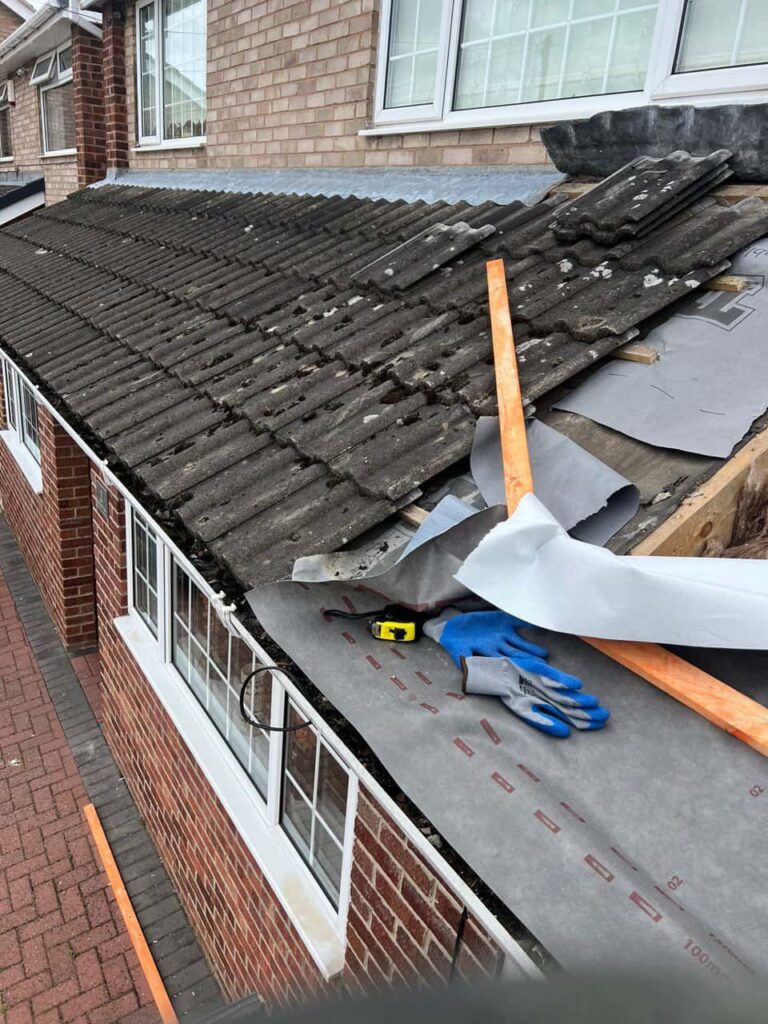
Roof tiles are designed to remain securely positioned while forming an overlapping covering that directs rainwater safely down the roof. When a tile begins sliding towards the eaves, the movement is usually a sign that something responsible for holding or supporting it has changed. The problem might involve the tile itself, its fixing, the battens beneath it or deterioration affecting a wider section of the roof.
For homeowners in Tamworth, Staffordshire, a sliding tile should therefore be treated as more than an appearance issue. Although one displaced tile can often be repaired locally, repeated movement may indicate deterioration beneath the visible roof covering. Identifying the reason for the movement is essential if the repair is expected to remain secure.
What Causes Roof Tiles to Slide Downwards?
Gravity naturally pulls roof tiles down the slope, but the roofing system is designed to resist that movement. Tiles are positioned, overlapped and secured so that they remain stable despite exposure to wind, rain and changing weather conditions.
Sliding normally begins when part of this arrangement becomes less effective. Understanding which component has failed allows the repair to address the cause rather than simply moving the tile back into position.
Deteriorated Fixings Can Allow Tiles to Move
Fixings play an important role in keeping roof tiles correctly positioned.
As roofing components age, individual fixings can deteriorate or become less effective. Once a tile is no longer held as intended, gravity can gradually pull it further down the roof slope.
The movement may initially be small. A tile might simply sit slightly lower than those around it before eventually becoming noticeably displaced.
Repositioning the tile without addressing its fixing may therefore result in the same problem returning.
Damaged Battens Can Affect Tile Support
Roof battens provide support and fixing points beneath the tiled covering.
If a batten deteriorates or becomes damaged, the tiles associated with that section may lose some of the support required to remain correctly positioned. This can sometimes explain why several neighbouring tiles begin moving rather than one isolated tile.
The visible problem may therefore be on the outside of the roof while the cause lies beneath it.
Where repeated slippage is occurring in one area, the condition of the supporting construction deserves closer investigation.
Damage to the Tile Itself Can Cause Slippage
Sometimes the problem is confined to the individual tile.
A tile that has cracked or broken around an important fixing or supporting point may no longer remain securely positioned. Even if much of the tile appears intact, damage in the wrong place can allow it to move downwards.
In this situation, replacing the damaged tile may provide an appropriate local repair if the surrounding roof remains sound.
Checking neighbouring tiles at the same time can help confirm that the problem is genuinely isolated.
Wind Can Expose an Existing Weakness
Strong winds can contribute to tile movement, particularly where a tile is already loose.
Wind pressure can lift or disturb vulnerable tiles, reducing their secure positioning and allowing them to settle further down the slope afterwards. A tile with a weakened fixing may therefore remain apparently normal until demanding weather exposes the defect.
This is why slipped tiles are sometimes noticed after periods of stronger weather.
However, the weather itself should not automatically be assumed to be the complete cause. The condition of the fixing and surrounding roofing should still be assessed.
Repeated Weather Exposure Can Affect Older Roofing Components
Roofs spend their entire service life exposed to changing outdoor conditions.
Rain, wind and temperature variations continually affect the different materials within the roofing system. Over time, components can deteriorate at different rates.
The tiles themselves may remain relatively serviceable while fixings or battens beneath them become less dependable.
This explains why an established roof can begin developing slipped tiles even when large areas of the visible covering still appear reasonably sound.
One Sliding Tile Can Affect the Surrounding Covering
Roof tiles are installed as an overlapping system rather than as completely independent components.
When one tile moves significantly downwards, the intended relationship with neighbouring tiles can be disrupted. The area it previously covered may become more exposed, while nearby tiles can also be affected by the change in positioning.
The problem can therefore become more significant if left unresolved.
Early repair can help restore the intended arrangement while the surrounding section remains serviceable.
Several Sliding Tiles Can Indicate a Wider Problem
One displaced tile and repeated tile movement across the same roof should not automatically receive the same diagnosis.
If several tiles are sliding in a concentrated area, they may share the same underlying weakness. A deteriorated section of batten, ageing fixings or another problem beneath the covering may be affecting them collectively.
Continually repairing each tile individually may not provide a lasting solution if the common cause remains untouched.
A broader inspection can establish how far the deterioration extends.
Sliding Tiles Across Different Areas Deserve Investigation
The pattern becomes even more important when displaced tiles begin appearing in several separate parts of the roof.
Occasional isolated defects can develop during the normal life of a tiled roof. However, increasing numbers of slipped tiles across different sections can suggest that roofing components are becoming less reliable more generally.
This does not automatically mean that complete roof replacement is necessary.
It does mean that assessing the overall condition of the roof may be more appropriate than continuing to treat each new slipped tile without considering the wider pattern.
Previous Tile Repairs Can Provide Useful Clues
The repair history of a roof can help identify recurring problems.
If a tile has previously been repositioned but begins sliding again, the original cause may not have been fully addressed. Alternatively, deterioration within surrounding materials may have progressed since the earlier repair.
Repeated slippage around several previous repair areas can be particularly informative.
It may indicate that the remaining original fixings or supporting materials are becoming less dependable even where previous repairs themselves remain sound.
Incorrectly Secured Replacement Tiles May Move Again
A replacement tile needs to be compatible with the existing roof and secured appropriately.
Simply inserting another tile into the space does not necessarily provide a dependable repair. Its fixing and the condition of the supporting materials also need consideration.
If the batten or fixing point beneath the replacement is unsuitable, the new tile may eventually experience the same movement as the one it replaced.
Professional repair therefore involves understanding why the original tile moved before deciding how the replacement should be installed.
Why a Sliding Tile Can Increase the Risk of Water Ingress
Roof tiles rely on carefully arranged overlaps to manage rainfall.
When a tile slides down the slope, part of the area previously protected by that overlap can become exposed. Wind-driven rain may then have greater opportunity to reach beneath the primary covering.
Water ingress does not necessarily become visible immediately.
Moisture can travel beneath tiles and along other roofing components before appearing internally, which means the location of a damp patch may not correspond directly with the slipped tile.
Small Movement Can Be an Early Warning Sign
A roof tile does not need to have moved dramatically before it deserves attention.
One tile sitting slightly lower than neighbouring tiles can indicate that its fixing or support has already become compromised. Catching the problem at this stage can allow the area to be assessed before the tile moves further.
Other early indications can include uneven tile lines, small gaps developing within the covering or one section beginning to look noticeably different from the surrounding roof.
These changes can be particularly useful when they are new or becoming progressively more pronounced.
Does a Sliding Tile Mean the Roof Needs Replacing?
Not necessarily.
A single slipped tile caused by an isolated damaged fixing, tile or small local defect can often be dealt with without disturbing the wider roof. Where the surrounding materials remain sound, targeted repair is generally more appropriate than unnecessary replacement.
Replacement becomes a different consideration when tile movement is widespread, supporting components are extensively deteriorated or defects are appearing increasingly often across the roofing system.
The extent and cause of the deterioration should determine the solution rather than the presence of one slipped tile.
Why Simply Pushing the Tile Back Is Not Enough
Moving a displaced tile back into alignment may improve the appearance of the roof, but it does not explain why the tile moved.
If the fixing has failed, the tile can slide again. If the batten beneath it has deteriorated, the support problem remains. If the tile itself is damaged, repositioning it does not restore its integrity.
An effective repair therefore needs to deal with the component responsible for the movement.
This is what helps prevent a temporary adjustment from becoming a recurring problem.
Professional Assessment Can Identify the Extent of the Problem
The visible position of the tile provides only part of the information needed.
A professional assessment can consider the displaced tile, neighbouring covering, fixing arrangement and condition of accessible supporting components. Where several tiles are affected, the pattern of movement can also help identify whether deterioration is localised or more extensive.
This allows repairs to remain proportionate.
Sound roofing can be retained where appropriate, while areas requiring more substantial attention can be identified before further movement occurs.
Professional Slipped Tile Repairs in Tamworth, Staffordshire
At Tamworth Roofing Repairs, we understand that tiles sliding down a roof slope can result from several different faults. Identifying whether the problem involves an individual tile, deteriorated fixing, supporting batten or a wider section of roofing is an important part of providing an appropriate repair.
Rather than simply repositioning the visible tile, the affected area should be assessed to determine why the movement occurred.
For homeowners in Tamworth, professional inspection can help ensure that localised problems remain localised wherever possible while identifying wider deterioration when it genuinely requires attention.
Conclusion
Roof tiles usually begin sliding down the roof slope when the components responsible for securing or supporting them are no longer working effectively. Deteriorated fixings, damaged battens, broken tiles and weather-related movement can all contribute to the problem.
One slipped tile can often be a straightforward local defect, but repeated movement or several displaced tiles can indicate deterioration beneath a larger section of the covering. Simply pushing tiles back into place without identifying the cause may allow the problem to return.
If you have noticed slipped, loose or uneven roof tiles at your property in Tamworth, Staffordshire, contact Tamworth Roofing Repairs. We can assess the affected area, identify the reason for the movement and recommend an appropriate repair based on the actual condition of the roof.
Call us on: 01827 949 591
Click here to find out more about Tamworth Roofing Repairs
Click here to complete our contact form and see how we can help with your roofing needs.